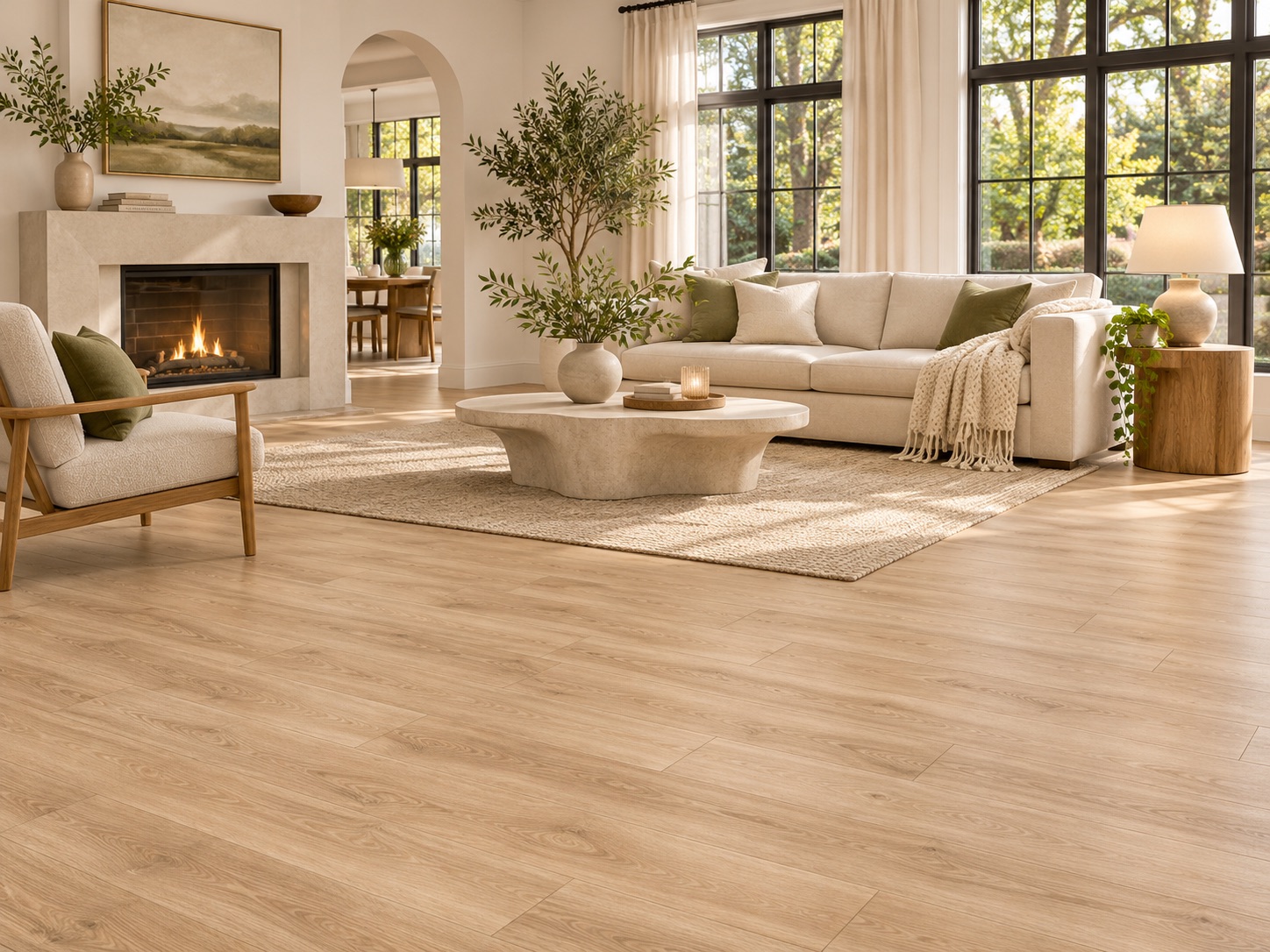
Engineered hardwood offers a real wood surface, but its performance still depends on the product and the room. Florida homeowners should pay particular attention to indoor conditions and the substrate below the floor.
Understand the construction
Engineered wood is a family of products, not one specification. Compare the surface species, finish, plank size, core, and the manufacturer's approved installation methods. The real-wood surface is what distinguishes it from a printed wood-look floor.
Discuss moisture before style details
A beautiful board should not be installed over a known moisture condition. The NWFA guidelines call for evaluating both the flooring and the substrate and following manufacturer requirements. Concrete and wood subfloors raise different questions.
Plan for everyday use
Ask how the finish should be cleaned, what humidity range the maker requires, and whether the product can be refinished. Refinishing potential varies with construction and wear-layer thickness; do not assume it from the name alone.
A practical checklist
- Review the exact product's installation instructions.
- Confirm indoor climate and substrate testing.
- Compare finish and maintenance guidance.
Can engineered hardwood go over concrete?
Some engineered products can, with an approved method and moisture-control system. The selected product's instructions and slab test results decide.
General planning information. Site conditions and the selected manufacturer's instructions determine the installation details.